

Practical structural calculation guide for metal projects in Menorca
How to approach the structural calculation of a metal solution without overruns: loads, boundary states, arrow, junctions and anchor verification.
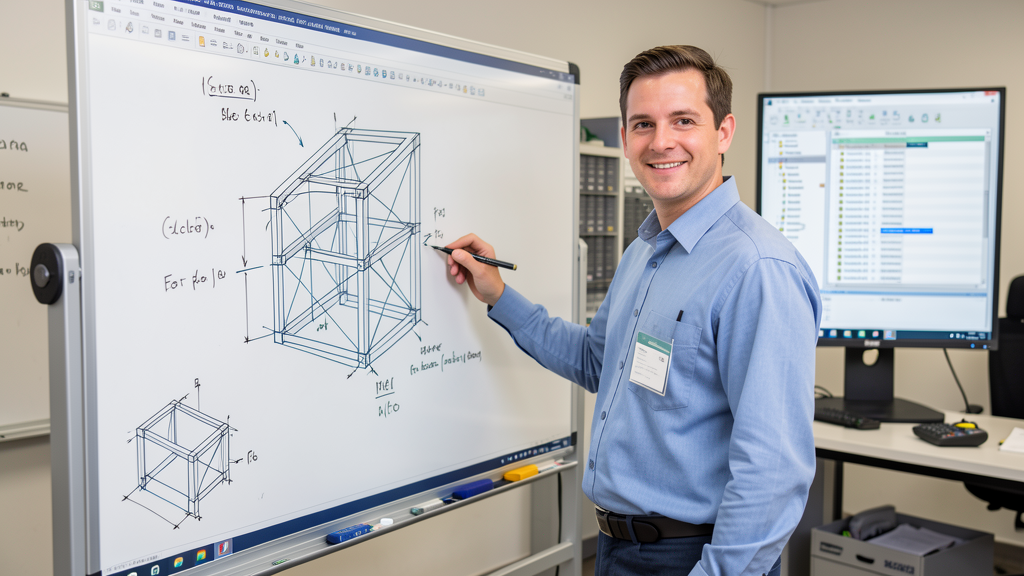
Structural calculation is not a process: it is what separates a safe and efficient solution from an oversized or problematic structure.
This guide summarizes how it is presented in regular metal projects of housing, commerce and light industry.
1) Start with real actions
Any structure should consider at least:
- own weight,
- use overloads,
- wind,
- enclosure/equipment loads,
- actions during assembly (when applicable).
Without a well-defined load scenario, the rest of the calculation loses value.
2) Limit States: resistance and service
In practice, two blocks are verified:
- Resistance (ELU): which profiles, connections and anchors support the stresses.
- Service (ELS): which deformations and vibrations do not affect use, finishing or perception of quality.
A common mistake is to focus only on endurance and forget permissible arrow.
3) Deflection and deformation: key factors in roofs and cantilevers
In metal work, a piece can “hold” and still malfunction if it deforms too much. That causes:
- visual sensation of combado,
- fissures in encounters,
- poor drainage on decks,
- misfits in carpentry or panels.
Therefore the limitation of deformations must be defined from the design phase.
4) Unions and anchorages are no minor detail
A structure does not behave the same according to how it is joined. It must be defined:
- type of coupling (screw/welded/mixed),
- transmission of efforts,
- thickness of plates/cartels,
- anchoring to existing support and quality of the actual support.
It is not useful to calculate only “bar”; the node and support are part of the system.
5) Optimizing is not cutting
Optimizing calculation means:
- use material where it is needed,
- reduce unnecessary weight,
- simplify manufacturing and assembly;
- maintain safety and durability.
When calculation and workshop work coordinated, it lowers rework and improves the total time frame.
6) Technical checklist prior to manufacture
- documented load scenarios,
- ELU/ELS verifications carried out,
- dimensional couplings and anchorages,
- compatibility with actual work geometry,
- material specification and anticorrosive finish.
Related guides
- Guide to metal structures in Menorca: planning, design and assembly
- CAD design guide for metal manufacturing and metal structures
- Guide to the workshop process: from budget to final assembly
Closure
A well thought out calculation allows building with more safety, less incidences and better cost control. In metal projects, the good result comes when calculus, CAD design and workshop form a single chain.
Recommended guidelines for deepening
If you want to compare options with more criteria, here are practical planning, calculation and design guides.
Do you need this service in Menorca?
We help you define solution, materials and execution for your specific case.