

Guide to metal structures in Menorca: planning, design and assembly without surprises
What to check before making a metal structure: use, loads, marine corrosion, permits, deadlines and actual assembly sequence.
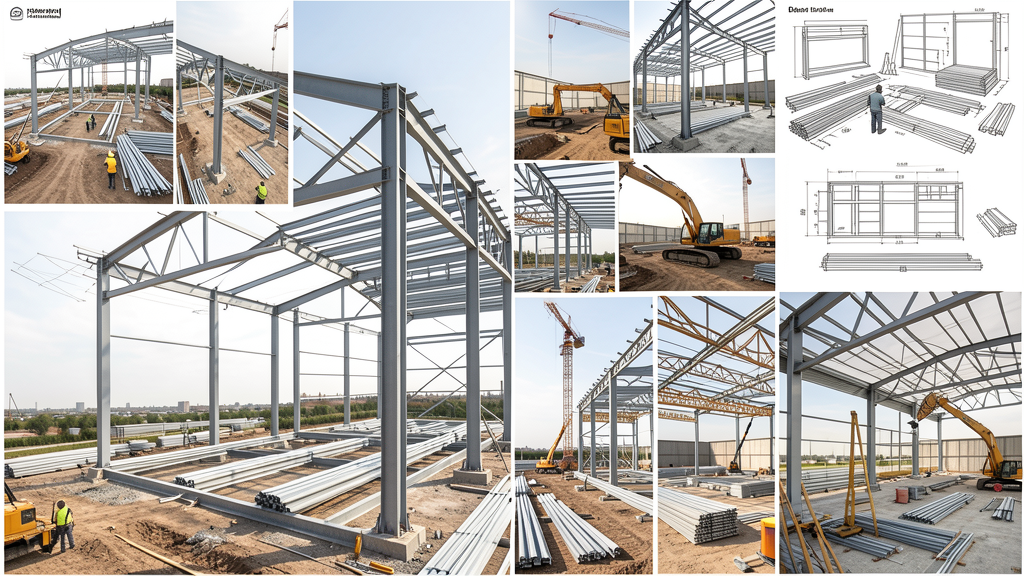
If you want a metal structure to work well for years, success is not in “fast welding”, but in plan correctly before manufacturing.
In Menorca this is even more important for three reasons:
- marine environment (corrosion),
- wind exposure,
- work with access and logistics sometimes limited.
1) Defines actual use (not just form)
Before design, it is appropriate to fix:
- what function it performs (cover, loft, technical support, pergola, gangway, reinforcement),
- what loads you will have (persons, equipment, wind, enclosures, maintenance),
- what service life you expect and how much maintenance you accept.
When use is clear, the type of profile, supports and finishes are best chosen.
2) Lifting and measuring: critical phase
The most expensive errors arise in measurement. Therefore, in professional workshop work is done with:
- measurement of gaps and actual elevations,
- verification of squads and anchor points,
- interference detection (installations, drains, carpentry).
A good uprising avoids impromptu cuts in construction and delays for pieces that do not fit.
3) Material selection and anti-corrosion system
In the coastal environment, it is not enough with “painted steel”. The usual strategy combines:
- structural steel suitable for the project,
- surface preparation,
- protection system (printing + finishing), or
- galvanized/inox when applied by exposure and use.
The key is to adjust the system to the real environment: inside, outside protected or outdoor exposed to saline breeze.
4) Design of joints and assembly from the start
Many incidents come because they do not think of the assembly in phase of design. It is necessary to solve before:
- if the joint is welded, screwed or mixed,
- hoisting sequence and positioning,
- tolerances for manufacturing and absorption of deviations,
- accessibility for screwing, checking or maintaining.
Designing “to manufacture and assemble” reduces work hours and rework.
5) Coordination with work and permits
Depending on the scope of the project, coordination with optional direction or specific technical documentation may be necessary. Even in small works, it is advisable to validate:
- compatibility with enclosures and slopes,
- drainage and water disposal,
- use security and maintenance accesses.
6) Quick checklist before moving to workshop
Before launching production, check this minimum:
- use and defined loads,
- verified measures in the field,
- confirmed material and finish,
- joints and anchors resolved,
- validated mounting sequence,
- production times + coordinated assembly.
Relationship with calculation, CAD and workshop process
If you want to deepen in phases, we recommend these complementary guides:
- Practical structural calculation guide for metal projects in Menorca
- CAD design guide for metal manufacturing and metal structures
- Guide to the workshop process: from budget to final assembly
Conclusion
The well-executed metal structure starts long before cutting: it begins in the technical definition. If the objective is to avoid surprises, it is advisable to work with complete flow: lifting, design, manufacturing and coordinated assembly.
Recommended guidelines for deepening
If you want to compare options with more criteria, here are practical planning, calculation and design guides.
Do you need this service in Menorca?
We help you define solution, materials and execution for your specific case.